
Dosing Systems
Dosing systems that provide control.
From simple manual mixing to precise, water-driven dosing.
Controlled mixing
Precise dosing.
The same results every day.
Dosing starts with one goal: a predictable mixture of water and cleaner, so that your cleaning process runs smoothly without operators having to “adjust” it or second-guess themselves every time. Dosing systems are part of the Flexoclean cleaning concept: controlled mixing of water and cleaner and automation of the cleaning process.
Better cleaning results
Consistent print quality and less waste
A practical routine: simple, safe, and repeatable
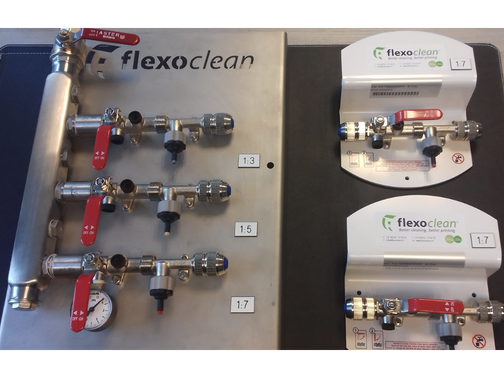
Why dosing technology?
Understand how to mix and apply it.
In many factories, variation isn't caused by the cleaner itself, but by the way it's mixed and applied: pressure and flow fluctuate, manual mixing results in a different ratio each time, or multiple machines require a consistent approach.
Dosing technology makes the processmanageable. You can tailor it to your machinery, your water supply, and your desired level of automation.
This determines the correct solution.
First, we’ll assess your practice. Four factors together determine which system is right for you.
Number of pickup locations
How many machines or dispensing points use the solution?
Available Water Pressure
Press and flow where you want to mix.
Desired concentration
The mixing ratio required for your cleaning process.
Degree of automation
From manual mixing to integration with your PLC.
Three systems
Choose the dispensing solution that's right for your workplace.
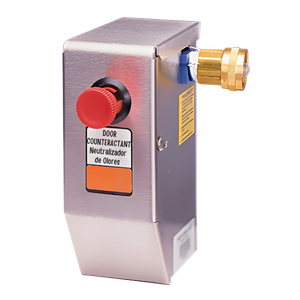
Hand Dose
Manual mixing on site
Works without water pressure or flow
Simple Getting-Started Solution
For situations where precision is less critical
Venture
Simple dosing principle
No moving parts
Simple and affordable
The mixing ratio may vary
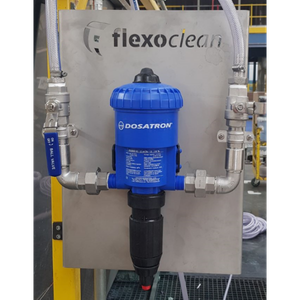
Dosatron
Precise water-driven metering pump
Constant dosage
Adjustable dosing ratio
Suitable for central installations
manual mixing
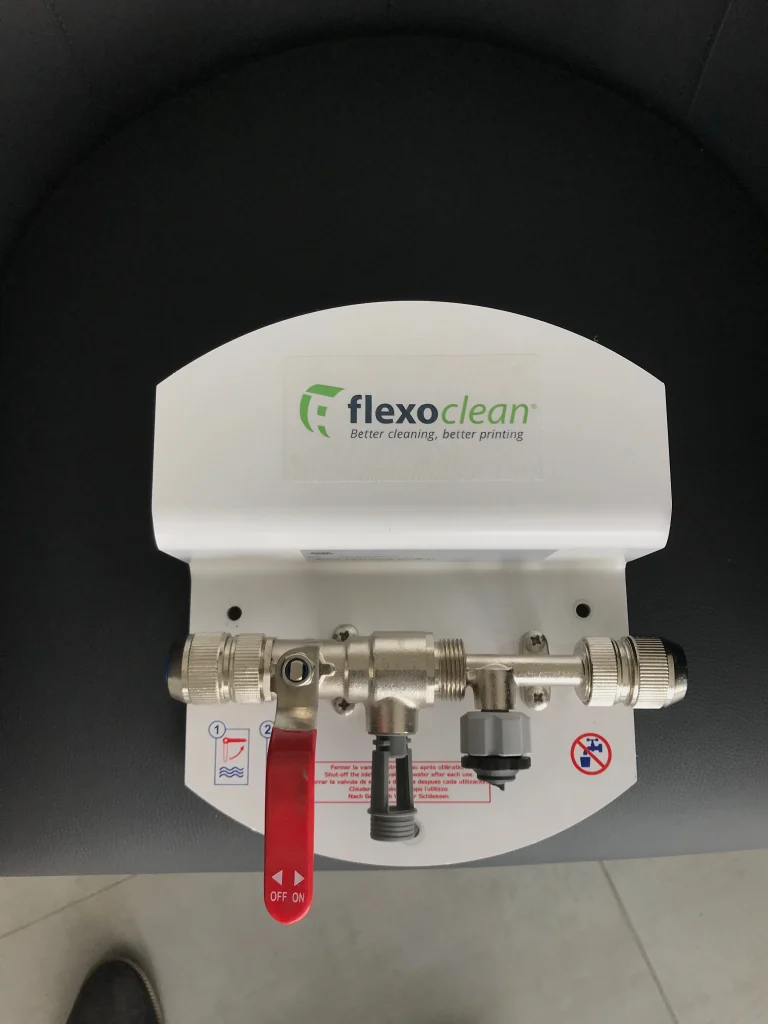
Hand Dose (6150-0001)
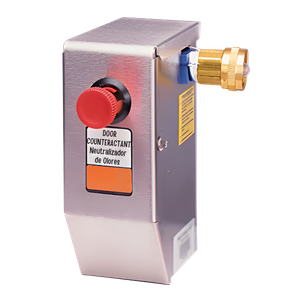
A simple manual dosing solution for mixing cleaning solution with water, without relying on water pressure or water flow.
How it works
Manual mixing of detergent with water at the mixing point. No mechanical or water-driven dosing.
When to choose
Suitable as an entry-level solution, for small installations, or when the user is allowed to determine the mixing ratio.
Typical setup
- Mixing point near the press/machine
- On-site water supply
- Manually setting the mixing ratio
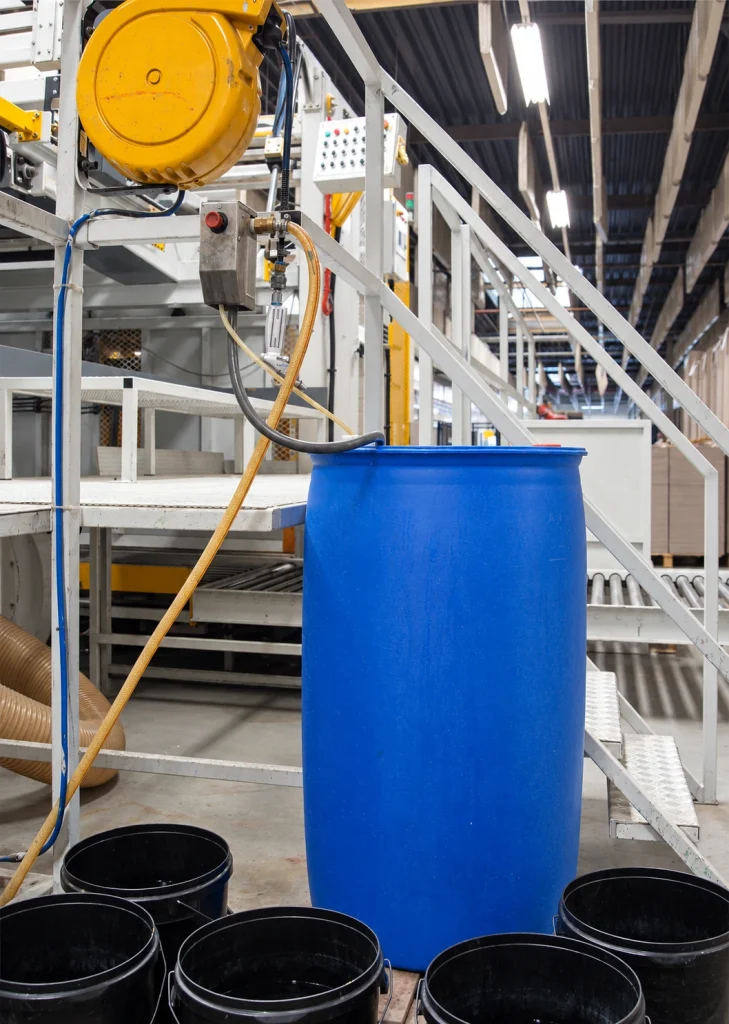
Pressure caused by narrowing
Venturi metering system
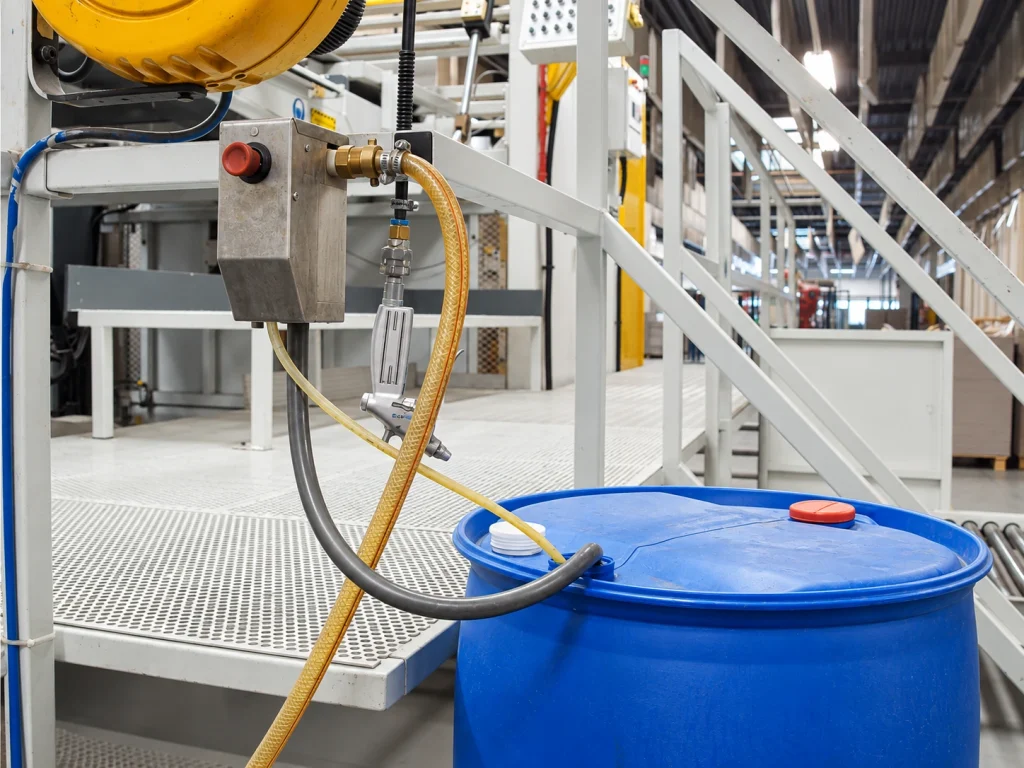
A Venturi tube utilizes the velocity of flowing water. A narrowing creates a vacuum, which automatically draws in the liquid.
Benefits
- No moving parts
- Installation directly on the water supply line
- Uses water flow as a source of power
- Quick installation (less than 30 minutes)
- Suitable for a 200-kg drum or a 1,000-kg container/IBC
- Dilution: 1:10
Disadvantages / Points to consider
- Irregular dosing: the mixing ratio changes when water pressure or flow changes
- Works best only when there is a sufficient pressure difference
Typical requirements (pressure and flow)
- Minimum pressure: 1.5–2.0 bar (start suction)
- Ideal pressure: 2–4 bar
- Required pressure difference: ΔP ≈ 0.5–1 bar
Use
Simple mixing systems, applications where precise dosing is not critical.
Water-driven metering pump
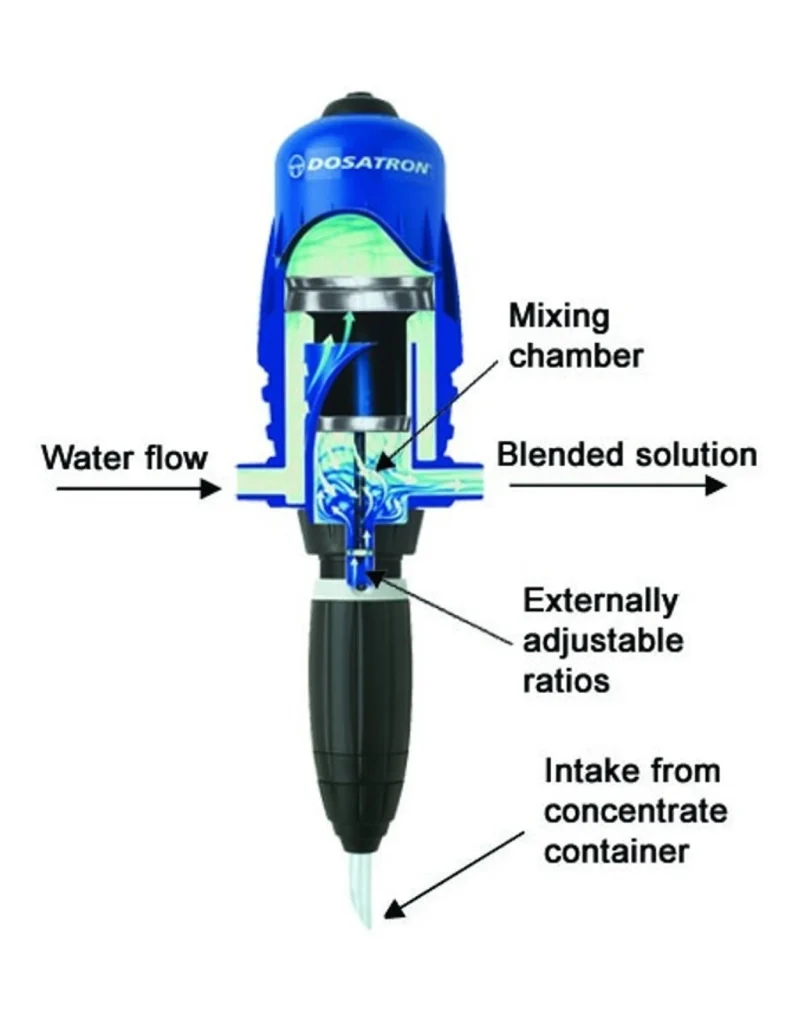
Dosatron dosing systems
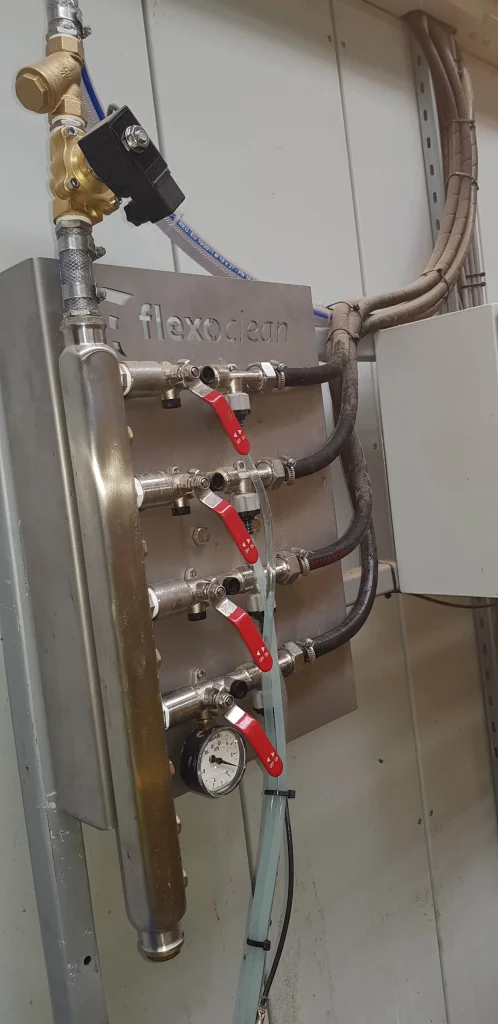
A mechanical dosing pump powered by the water flow itself. The water flow drives an internal piston pump mechanism that injects a precisely set amount of concentrate.
Benefits
- Highly accurate and consistent dosing
- Regardless of pressure fluctuations (within the operating range)
- Adjustable dosage ratio (e.g., 0.2–25%)
Disadvantage/Point to Consider
More parts → more maintenance
Use
Applications requiring precision (including cleaning and disinfection).
Common types
- D25RE10
- D3RE25
- D25RE10AF
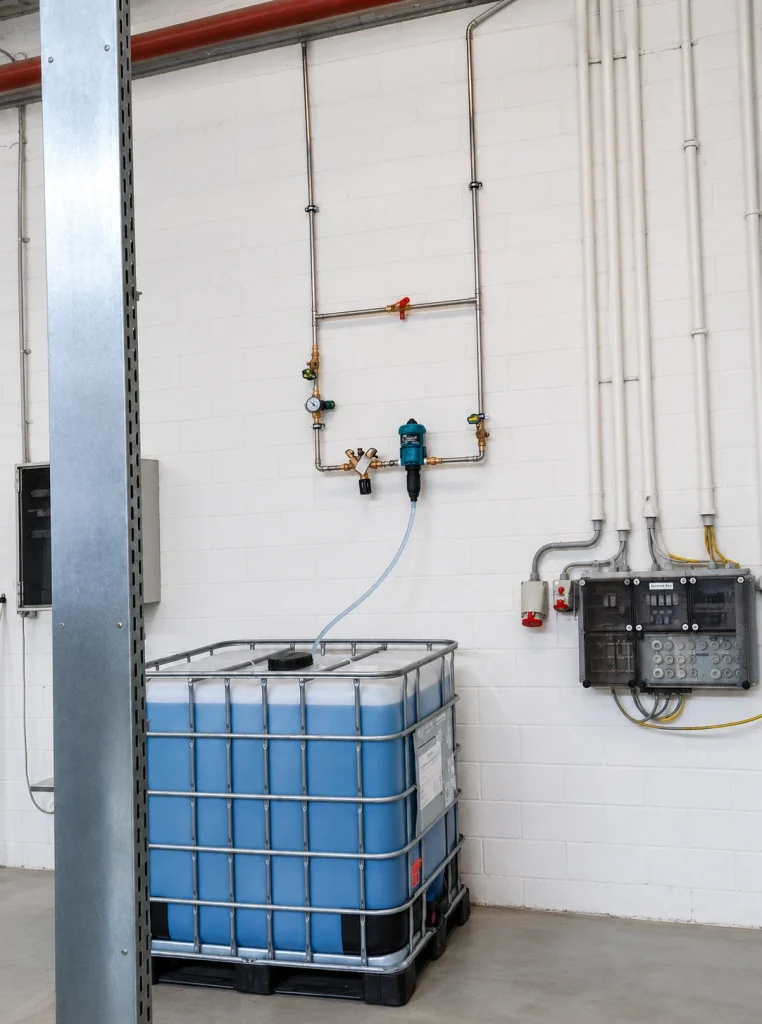
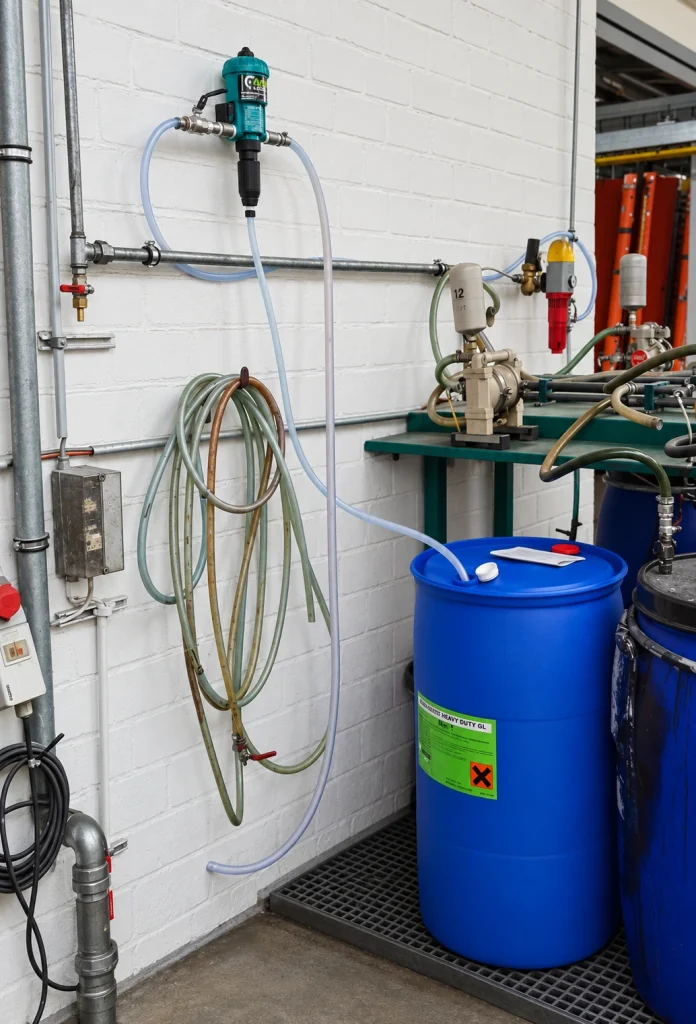
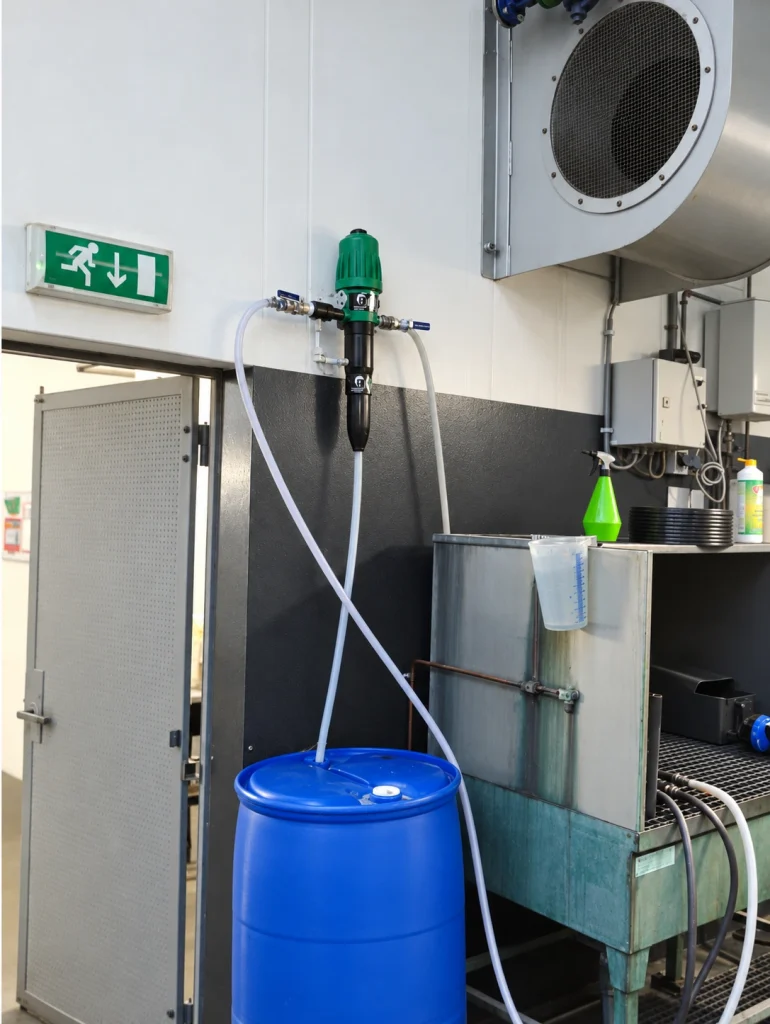
Options and Configurations
From a single IBC to centralized dispensing.
These are the most common configurations. The choice depends on the number of machines, your infrastructure, and the desired level of automation.
01
IBC Mixing Station
02
Mixing station
03
Dosing unit with PLC
04
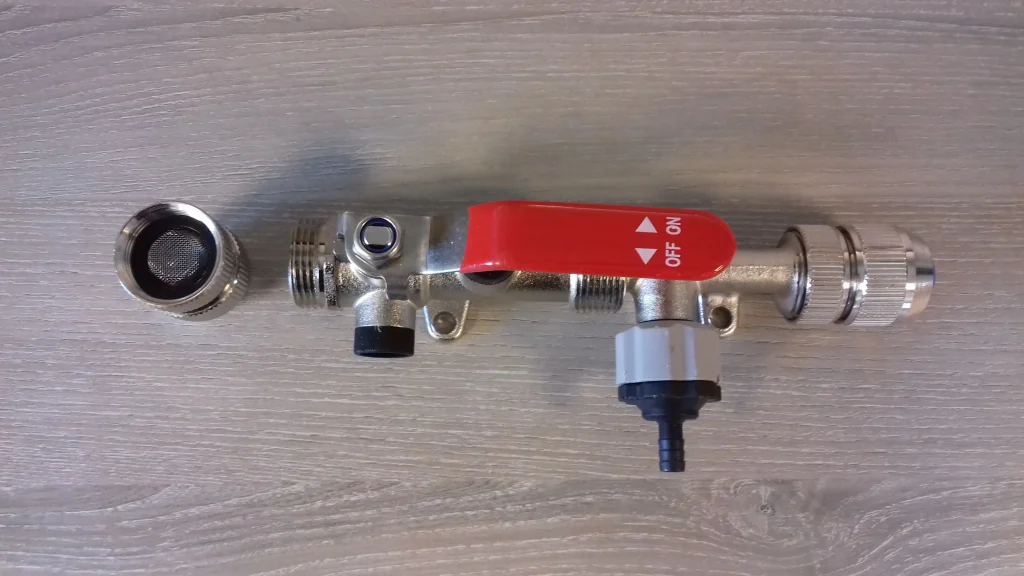
Custom-made dosing plate
05
Central dosing
Comparison
Three systems side by side.
The table compares the three systems in terms of technology and applicability.
| Feature | Hand Dose | Venturi | Dosatron |
|---|---|---|---|
| Principle | Manual mixing | Pressure caused by narrowing | Water-driven metering pump |
| Precision | Measured manually | Varies with changes in pressure or flow | Highly accurate and consistent |
| Depending on pressure and flow | No | Yes | Less sensitive within the operating range |
| Prerequisites | Water Faucet and Mixing Valve | At least 1.5 to 2 bar, ideally 3 to 4 bar | Adjustable dosing percentage, for example, 0.2 to 25% |
| Maintenance | Low | Very low | More parts |
| Scalability | Manual Dosing Solution | Inline mixing system | From IBC setup to centralized dosing |
advice
A dispensing solution that works for your practice.
Please let us know the number of machines/tap points, the available water pressure/flow, and your desired level of automation. We will then recommend the appropriate system and the right configuration.
Be sure to include the following
Number of machines or pickup locations
Available Water Pressure and Flow
Desired level of automation