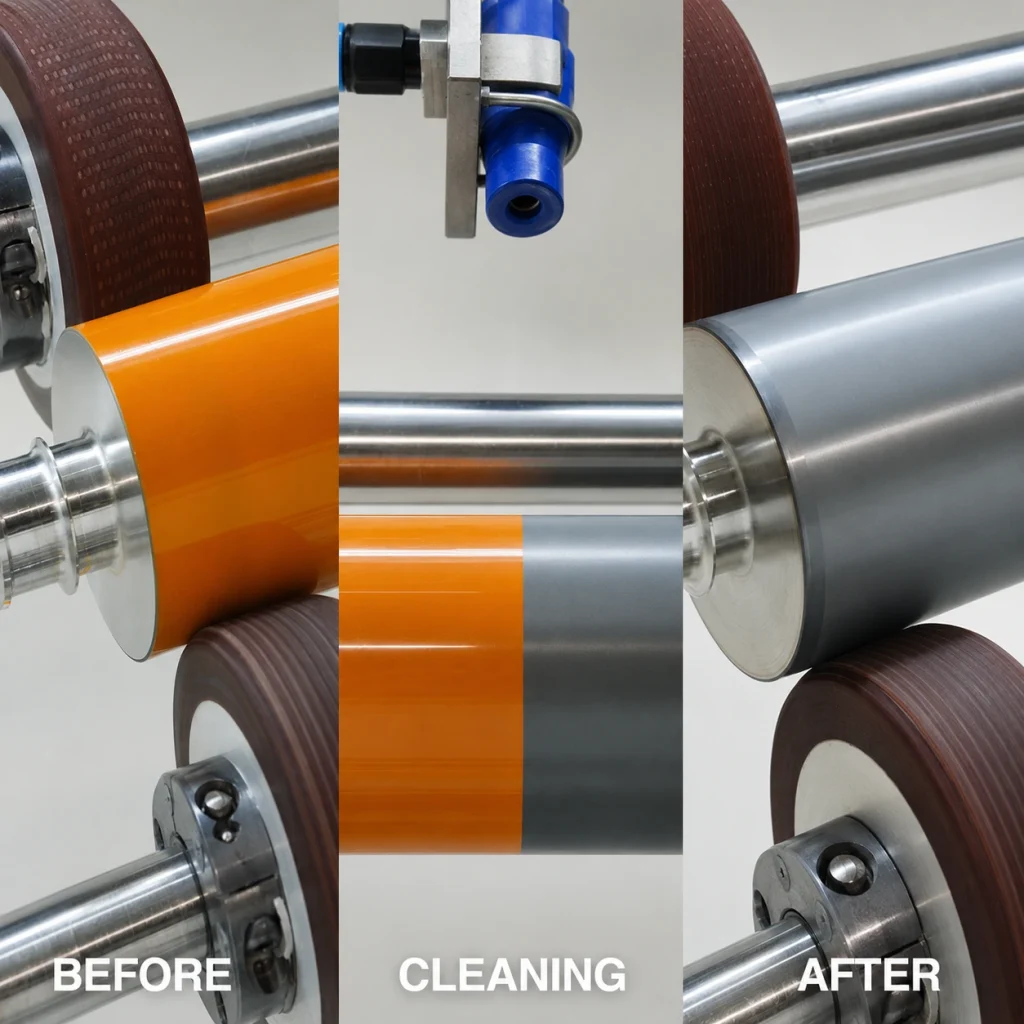
Clogged cells compromise print quality and increase production time.
Ink transfer issues, color variations, and unplanned downtime are often caused by heavily contaminated anilox roller cells. We clean your anilox roller down to the cell level: either at our facility or at your location.
Not just visibly clean, but demonstrably clean
We measure the cell volume before and after each cleaning. This way, you can see exactly what results the cleaning has produced, and you’ll receive a detailed report.
Two Methods for Thoroughly Cleaning Anilox Rolls
Which method is right for you depends on your situation. The result is the same: maximum ink transfer, consistent print quality, and fewer print failures.
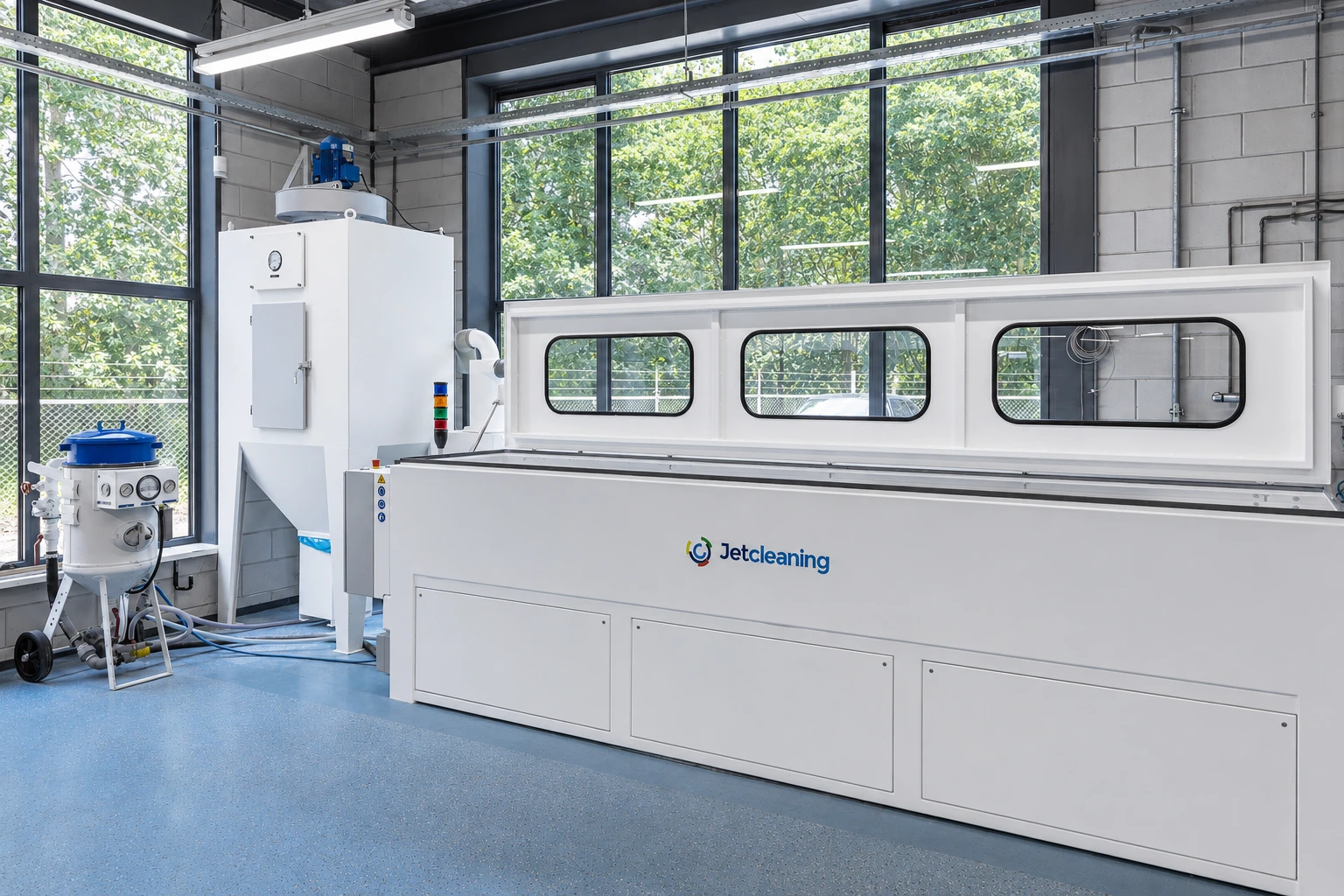
House Cleaning Services
At our cleaning facility, we can use a variety of techniques. This allows us to tailor the treatment to the type of anilox roller, the line count, and the degree of contamination.
Advantages:
- Measurement and reporting of cell volume before and after cleaning
- Several cleaning techniques are available
- For both light and stubborn dirt
- Up to 1,000 L/cm
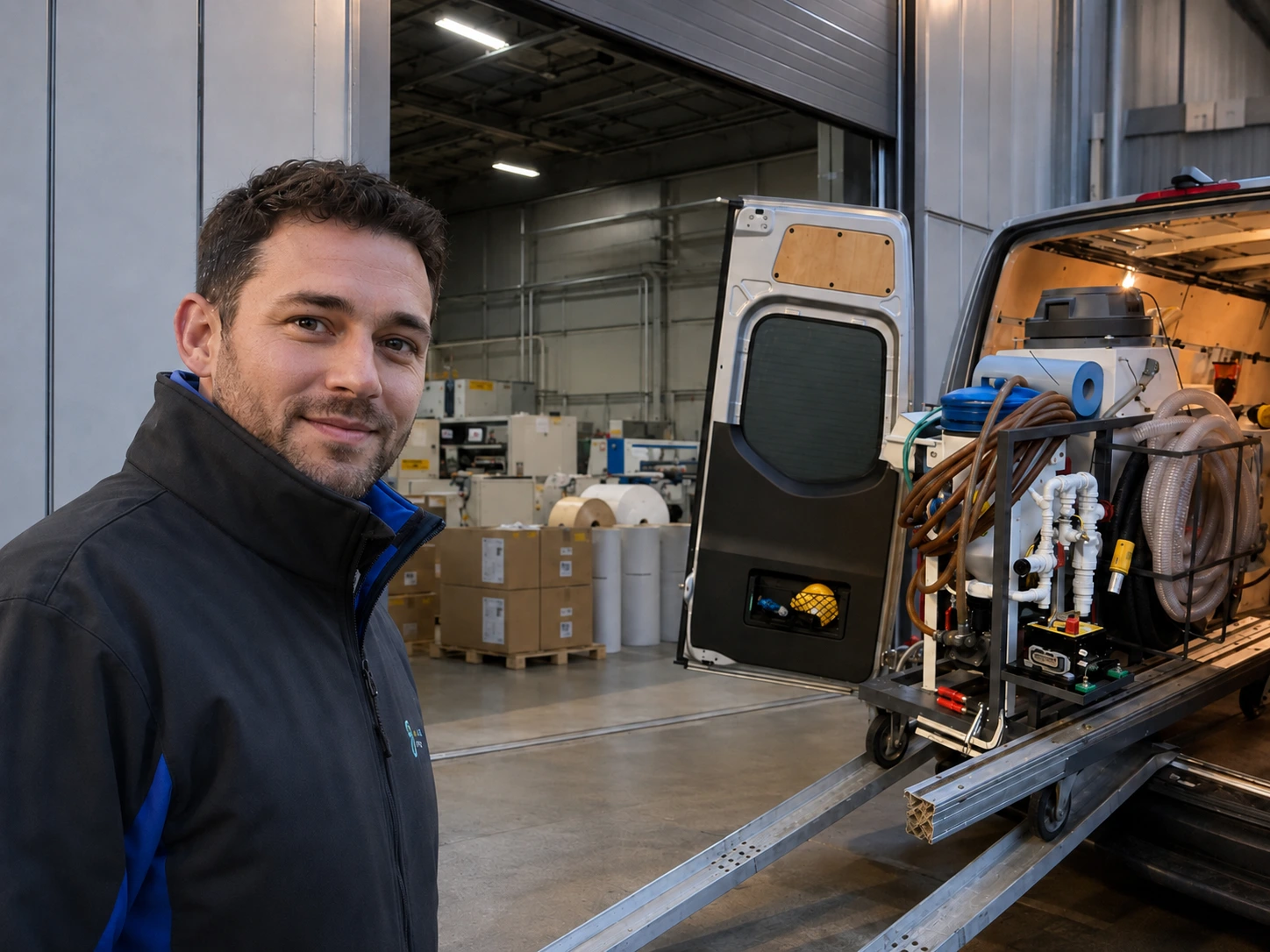
On-site Cleaning
Sometimes a anilox roller cannot be removed from the press, or it is better to schedule cleaning during a planned maintenance shutdown. In that case, we’ll clean it at your location.
Advantages:
- Cleaning Inside or Outside the Press
- No need to move the roller
- Can be scheduled during maintenance shutdowns
- Suitable for urgent quality issues
Our Cleaning Methods
Based on the linework, the type of contamination, and the condition of the anilox roller, we determine which cleaning method will yield the best results.
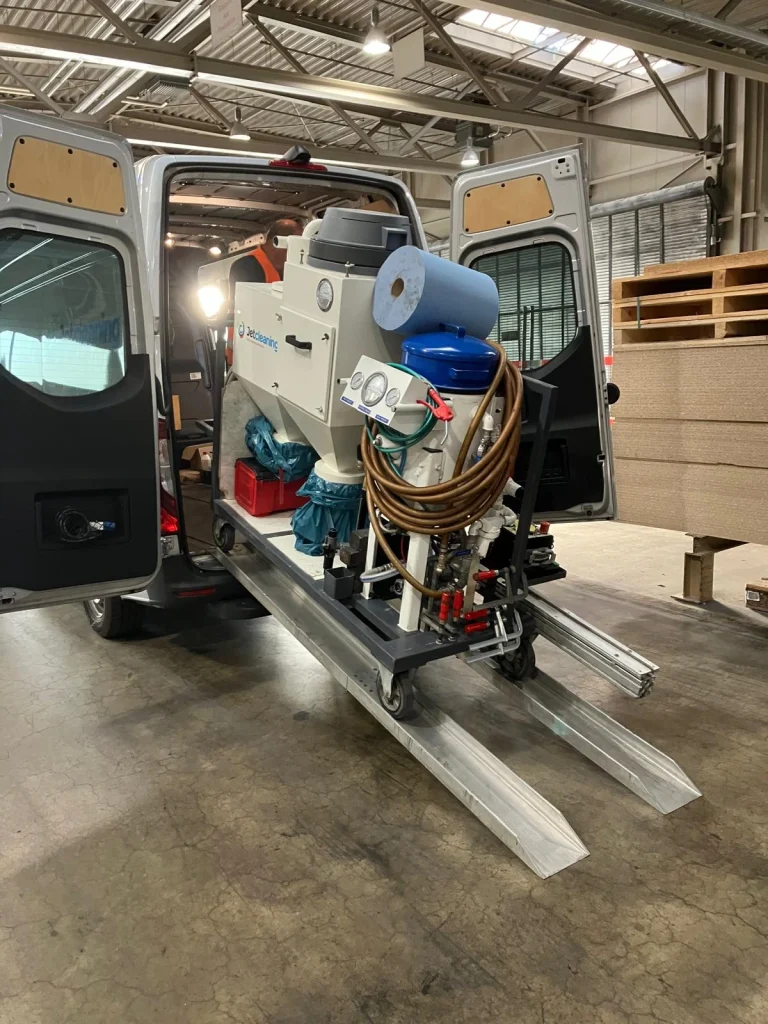
Cleaning the BioJet
With BioJet cleaning, we remove contaminants using sodium bicarbonate at low pressure. The method is gentle on the surface and suitable for coating rolls, offset rolls, and adhesive rolls, among others.
Suitable for:
- routine and accumulated contamination;
- coating, offset, and glue rollers;
- rolling operations that require gentle cleaning.
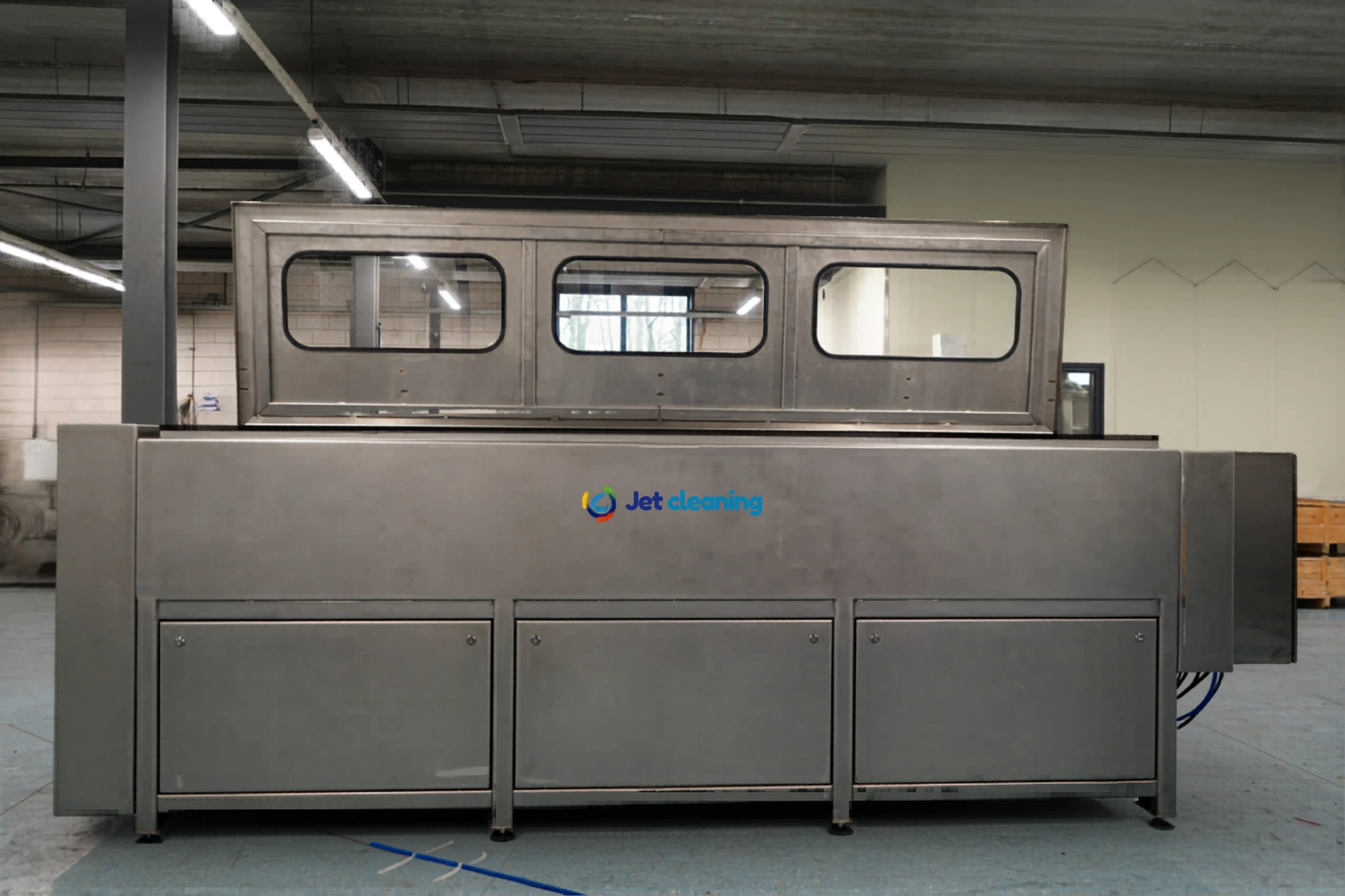
Jet-Flow Cleaning
With the Jet-Flow, we clean the anilox rolls and/or sleeves using heated liquid and massaging rubber rollers. This method is suitable for heavily dried-on ink residues, adhesive residues, and stubborn lime scale buildup.
Suitable for:
- heavily dried-on dirt;
- stubborn ink and adhesive residue;
- grid rollers with lime-related issues.
Here's how the cleaning process works
1.
Share the information
Please send us the line count, the type of anilox roller, the inks used, and, if possible, photos of the contamination.
2.
Get advice
We'll assess which route and cleaning method are best suited to your situation.
3.
Cleaning and Inspection
We measure the cell volume before and after cleaning and check the results.
4.
Report and Follow-up Recommendations
You will receive the results and practical advice on maintenance and preventing future contamination.
Frequently Asked Questions
That depends on:
- type of roller
- dimensions
- contamination of the roller
- conditions at the factory (including access to the rolling mill)
Yes, as a general rule, all ceramic and chrome rollers can be cleaned. The cleaning method is determined on a roller-by-roller basis.
No, cleaning can be performed both in-line and offline.
Based on factors such as the line pattern, the type of contamination, and the condition of the anilox roller, we recommend the most suitable method.
We can share the cleaning guidelines with you in advance, such as the availability of electricity, compressed air, water, drainage, and an operator.
You will receive a report from the meeting that we conduct using the Anicam before and after cleaning. This report shows the level of contamination and the volume of the cells before cleaning, as well as the results after cleaning.
Deep cleaning is necessary when daily and periodic cleaning no longer result in the desired volume. The frequency of deep cleaning cannot be determined in advance.
Which method is right for your grid roller?
You don't need to decide that yourself in advance. Based on the line pattern, the type of contamination, and the condition of the anilox roller, we will recommend the most suitable cleaning method.